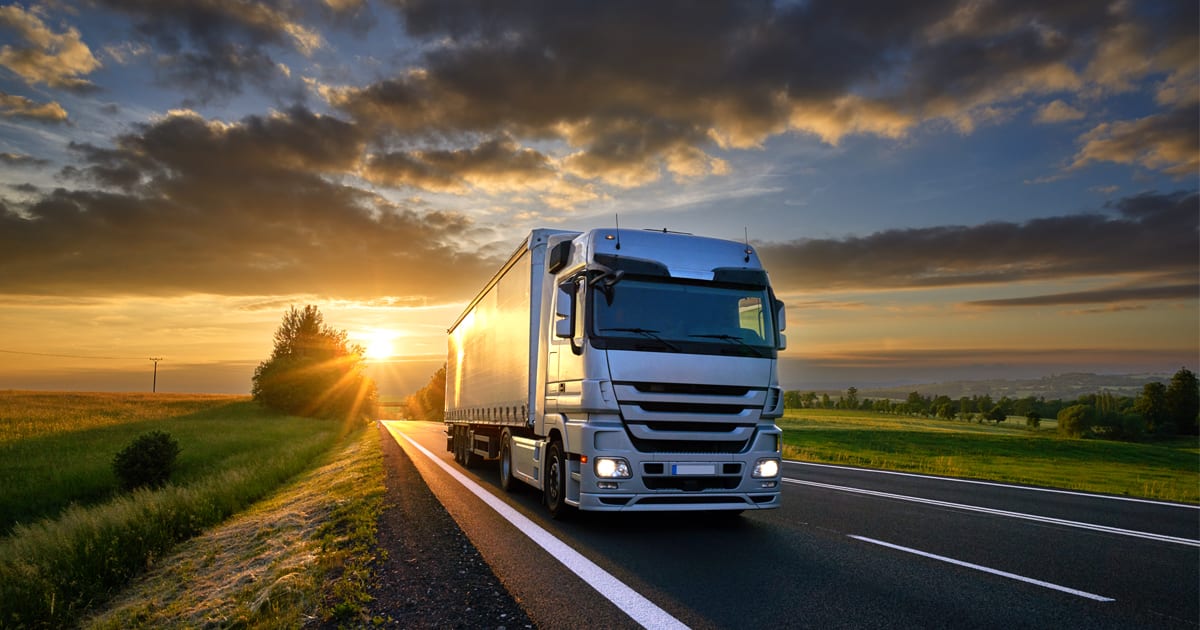
Inland Transport
Our Network consists of a large variety of vehicles that provide our customers a high delivery flexibility and this can be utilized upon customers request, type of cargo, and distance haulage.
The fleet diverse from single unit, Tractor-Trailer Combinations: Single Trailer, tractor-Trailer Combinations: Multi-Trailer, Auto carrier, Gooseneck trailer, and Skeletal trailer
Our main principles of transportation are economy of scale, economy of distance, and cost of velocity.
To achieve the seven rights of logistics, our experienced team is working to get the following qualification as one of the transportations guidelines.
Trucks and trailers are checked before loading to ensure that they are in good condition and appropriate for the load. This includes checking on stowage and the use of correct stowage tools.
The core competency of inland transportation is as follows:
1- Route Planning and Scheduling
Proper analysis and management of routing and delivery schedules are our responsibility. This analysis can achieve the following benefits to our customers.
- Examine all factors that may delay a shipment like transit time and on-time performance, including scheduling, routing, and sequencing of stops, risky locations, poorly equipped ports, and congested border crossings.
- Maximized equipment capacity.
- Products and Employee Safety by examining the available routes to check areas known for hijacking or product theft.
- Keep transportation costs at a minimum.
2-Fleet Management and Optimization
Fleet management and optimization are crucial to running an efficient supply chain to our customers, since effectively managing a fleet is crucial to making sure that required resources are functioning and available whenever they are needed.
Using the customized transportation management system, we ensure to our customers that optimization in one area does not cause de optimization elsewhere. Changes to transportation structure will not affect other areas such as warehouse performance.
3-Transportation Management System
Cutting-edge transportation management systems (TMS) play a key role in fleet optimization by enhancing planning and executing across the entire shipping system, indicating that TMS systems can handle routing and rating, executing a shipment across multiple modes, tracking and tracing loads, freight settlement, and hybrid planning, execution, and evaluation capabilities.
Routing and scheduling functions use optimization routines and mathematical models to generate routes that meet all requirements as efficiently as possible. Mode and carrier selection analyzes contracts and routing guides to determine the best mode or modes to use for a shipment. Options generated by a TMS are available digitally, allowing for quick decision making on freight purchases. These are just a few of the ways that a TMS can perform tasks that would be difficult to execute manually.
Use of our customized TMS helps our customers reduce freight costs by 6 to 10 percent. Using a TMS also reduces paperwork errors and increases visibility to the entire transportation network. A TMS can help an organization when it comes to additional fleet management tasks, such as fleet use optimization and modal optimization.
By Optimizing transportation process, we take into account freight consolidation opportunities and delivery data on orders and then determines the specific carrier or transportation vehicle to maximize efficiencies while abiding by our customer delivery requirements.